The 19th Century and our Modern World

The Nineteenth Century gives me real insights into human and social issues that are still current in the 21st century.

Throughout my exploration into the 19th century, particularly through engaging with my blogs, I have gained great insight into social issues that prevailed during the time. the most prevailing issue was the severe consequences of industrialisation and technological advancements. The impact of this issue therefore had a detrimental impact on human beings. Henceforth, this resulted in a number of human issues. However, the most prevalent was the indoctrination of a utilitarian mindset and therefore the rejection of emotion due to the overbearing social matters. Unfortunately, the issues are still current within the 21st century and perhaps have even further developed.

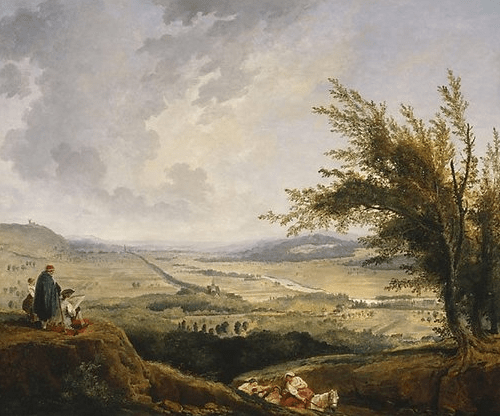
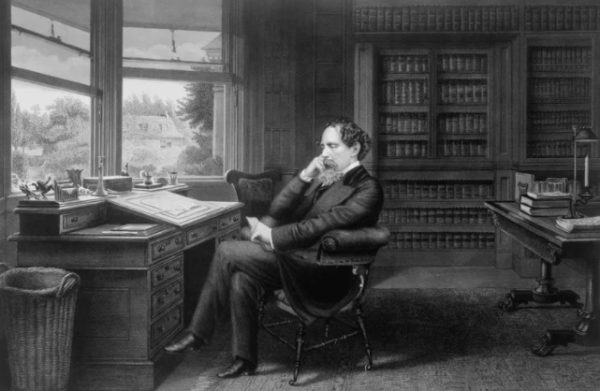
Within my critical blogs in particular, I deeply explored the social issue of industrialisation and the problems this caused for human beings. This can first be recognised in my blog titled ‘A letter to Dickens’ found here: https://thebestofliterature.art.blog/2020/04/27/a-letter-to-dickens/. In this blog I discussed how Dickens’ novel hard times, encapsulates how industrialisation lead to a utilitarian based society and therefore forced human beings into rejecting emotion to submit to a confined society. I discussed a scene from the book where Cecilia is asked to describe a horse however she could not name the facts of the horse such as the number of its teeth (Dickens 7). This highlights the way in which human beings were forced to adapt to a “fact, fact and fact!” based society and reject any other original thought (Dickens 10). Although in our modern-day society, we are actually encouraged to be creative, the mentality that we must follow the “facts” is still enforced through the media. Delving into the issues from the 19th century made me realise how negative the media can be on the human condition, especially during the current pandemic. Furthermore, these ideologies are also captured in my blog ‘An Extensive Landscape Near Paris’ found at this link: https://thebestofliterature.art.blog/2020/04/16/an-extensive-landscape-near-paris/. Here I explore Hubert Roberts painting illuminating the importance of nature and rejecting social expectations. Through vast green and yellow landscapes as well as purple and white hues in the sky, Roberts is able to capture the sublime essence of nature. Three people sit upon a hilltop, painting the beauty they are witnessing in front of them. In creating a painting where the appreciation of nature is so profound, Roberts encapsulates how people of this time should be rejecting social constructs and turning to nature where they can heal their human issues. This idea is one in which should be indoctrinated into our modern day society as well are we are still so fixated on social constructs.

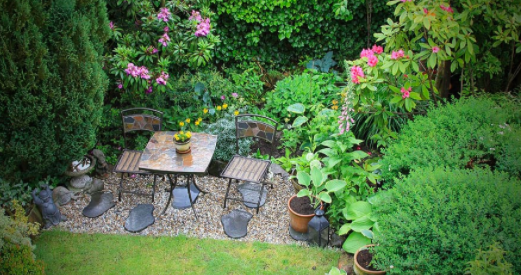
My creative blogs also demonstrate the issues that occurred in the 19th century and still remain relevant today. In my blog ‘Wise Passiveness’ I discuss how Wordsworths poem ‘Expostulation and Reply’ illuminates the way in which people do not sit with their own thoughts in nature, rather they are consumed by social expectations and technological advancements. My blog can be found at this link: https://thebestofliterature.art.blog/2020/03/16/wise-passiveness/ Wordsworth argues that by sitting in a “wise passiveness” within nature, one can gain wisdom and knowledge not hindered by society (Wordsworth lines 24). This ideology remains relevant to the 21st century as we are still so incredibly swept away by societal expectations evident through technology, leaving us flawed as humans. Moreover, my blog titled ‘Nan and Pops Garden’ further highlights how industrialisation and technological advancements have forced human beings to neglect nature despite it withholding many healing qualities. In this blog I delve into my own experience within my nan and pops garden and discuss how embracing myself in nature allows me to personally heal when faced with a challenge: https://thebestofliterature.art.blog/2020/03/09/nan-and-pops-garden/. However, alike that of the 19th century, we live in a society that does not care for the environment the way we should, rather we are more focused on technological advancements. In turn, this has created a number of human issues for us that we struggle to deal with.

Exploring social and human issues of the 19th century has opened my eyes to the problems that have carried over from that period into our own. We are still so fixated on technology, adhering to social expectations and rejecting the powers of nature. These social issues have manifested a number of human issues that we are still dealing with today.

Works Cited

Dickens, Charles. Hard Times. Proofed by David Price. 1854.

Wordsworth, William. Expostulation and Reply. The Norton Anthology of English Literature, Vol 2  (eight edition), edited by Stephen Greenblatt, New York: Norton, 2006.
Peer Review 3

Victoria Martin: https://victoriamartin.art.blog/2020/04/22/letter-to-louisa/

Hi Victoria, Wow! I have read through many letters to Louisa and yours sticks out to me by far. Immediately I am drawn into your blog with your use of the question “have you noticed the moon tonight”? Straight away I am catapulted into the peaceful tone that your letter proceeds to maintain throughout its entirety and this is exactly the kind of comfort that Louisa would have needed. I love how you have taken the approach of wanting to distract Louisa instead of reminding her of her troubles. You cleverly achieved this through cosmic questions; forcing Louisa to step way beyond the things that are in front of her. I love the imagery that you have utilised to do this, especially the concept of the goddesses dancing around the spinning planets. To me this brings an almost dream-like presence to your blog, further accentuating its peaceful tone. Your use of verbs throughout to draw in the reader are also extremely alluring. I found myself fixated on the words “detangle”, “squint”, “spinning” and “dare”, allowing me to be thrown into the rhythm of your blog. I like how at the end you have subtly captured some of the context of the Victorian Era through your reference of “facts” and “systems”, however, I would have loved to have seen you subtly contextualise a little more throughout to further link your letter to the novel and perhaps make your blog ever longer. Other than that, this is an amazing and very creative blog. Keep up the good work!

A letter to Dickens

Write a letter to Charles Dickens commending him on how he has exposed real deficiencies in human behaviour.

Dear Mr. Dickens,

I am writing to commend you on your ability to expose real deficiencies in human behaviour, particularly throughout your endearing novel ‘Hard Times’. The way you have encapsulated and so poetically expressed the extreme negativity that prevailed during the Victorian era as a result of industrialisation astounds me. I am especially intrigued with your ability to capture how these technological advancements forced humans into a utilitarian mind-set, placing their focus towards “fact, fact and fact!” (Dickens 10) as oppose too engaging with the subconscious mind and human emotion. I specifically love how you achieve this through exploiting the corrupt educational system of the Victorian era as children were taught to neglect their own sense of creativity and internal wisdom to submit to a confined, ‘factual’ and ‘practical’ society. This ideology was illuminated immediately for me in your novel in chapter two when Cecilia was asked to define a horse and if she would carpet her future home with prints of flowers. While asked to define the horse, Cecilia was unable to so to the standard of Mr Gradgrind as she could not identify the factual elements of a horse such as the number of its teeth (Dickens 7). This to me, was a brilliant way to critique the way in which children were taught from a young age to only concentrate on the empirical evidence that drives the world. Furthermore, alongside this moment, I admire how you cleverly analyse the way in which this fact-based mentality forced children to abandon their sense of creativity and free-will. This is evident in the moment where Cecilia states: “They [the flowers] would be the pictures of what was very pretty and pleasant, and I would fancy –“(Dickens 10), to which she is abruptly interrupted with “ay! But you mustn’t fancy!” (Dickens 10). You make it extremely clear that Cecilia must suppress her ‘wondering’ mind and stick to the ‘facts’ within society, thus you critique the way in which human beings failed to nurture the minds of one another which ultimately led to an impoverished society (Dickens 59). The way you have been able to make such commentary on these things inspires me. You have written an avenue for change and shed light on the very failings of human beings that one must not take lightly. I thank you for your incredible contribution to the world.

Kind Regards,

Teneille.

Texts quoted:

Dickens, Charles. Hard Times. Proofed by David Price. 1854.

Image take from: https://www.google.com/search?q=victorian+era+charkes+dickens+&tbm=isch&ved=2ahUKEwjV2pnL04jpAhUSFysKHR0ZAQwQ2-cCegQIABAA&oq=victorian+era+charkes+dickens+&gs_lcp=CgNpbWcQAzoECAAQQzoCCAA6BggAEAgQHlCuT1jYY2C2ZWgAcAB4AIABzAKIAasgkgEIMC4xLjEyLjOYAQCgAQGqAQtnd3Mtd2l6LWltZw&sclient=img&ei=KtamXtWdEJKurAGdsoRg&bih=544&biw=1050#imgrc=-UxJ6ev_JyV9fM

Peer Review 2

Anna Castagnella: https://literaturewithanna.art.blog/category/19th-century-literature/critical-blogs-19th-century-literature/

Hi Anna,

I think this blog is very well written. Your choice of wording to describe the painting is particularly alluring. I love the way you explained yourself engaging with the painting as your “eyes were drawn to the salience of the lake, and then wondered up the mountains and into the sky”. For me, this was very pleasant to read and provoked a sense of true tranquility like you have explained the painting achieves. I believe this line demonstrates how you, yourself engaged with the nature presented in front of you which was a key theme in Romantic ideology. I also like the way you have discussed how the mountains appear superior to humans and how this superiority makes it hard for humans to truly understand nature. Perhaps in this part you could have also mentioned how the darker tones of the mountains contrast the beauty of the sky which ultimately evokes a sense of mystery about nature as this was a time where in which humans were just beginning to re-engage with nature. Furthermore, perhaps you could have related your poem to Percy Shelley’s Mont Blanc to strengthen your understanding of literary themes for this period, that is just a suggestion though! I think that you have beautifully captured this artwork!

“An Extensive Landscape Near Paris”

Which painting made the strongest impression on you and how did it amplify your understanding of any of the literary themes that we have been exploring.

Amongst our exploration into art pieces created in the Romantic Period, we came across a painting by Hubert Robert titled “An extensive Landscape Near Paris”. This piece by far had the strongest impression on me as it solidified my understanding of literary themes associated with this time.

Immediately looking at the painting a sense of peace and tranquillity is evoked as you are catapulted into the sublimity of nature. This is achieved through the vast green and yellow landscape accompanied by an ascending hillside that sits directly in front of viewers eyes. In the right frame of the painting, a tree stands twisting and distorting upon the hillside, appearing superior to the small people. Moreover, the mix of purple, white and grey hues in the sky create an almost dreamlike atmosphere. When all of these elements are viewed as a whole the great beauty that is contained within nature is elucidated. This therefore directly amplifies my understanding of literary themes associated with the Romantic Period as one of the key aspects for this time was the appreciation and sublimity of nature as opposed to materialistic ideologies that were favoured in the enlightenment period. In addition to contrasting these materialistic ideologies, the inclusion of the women dressed in what can be assumed as lower class clothing moving upwards through the hillside metaphorically implies the progression of those in lower class positions and the beauty found within the ordinary.

 Furthermore, this theme of the appreciation of nature is further highlighted through the painter’s intentional incorporation of the people on the hill painting the beauty that lays ahead of them. This directly relates to literary themes that we have been exploring as it highlights the way in which Romantic idealists valued what they can gain from nature as opposed to intellectuality gained in books.

Thus, from this painting I have gained a profound understanding to the themes associated with the Romantic Period which include; one’s appreciation of the beauty of nature, the progression of the lower class and the way in which nature can unlock wisdom in a way that intellectual knowledge simply cannot.

Image retrieved from: https://www.artgallery.nsw.gov.au/collection/works/177.1995/

Peer Review 1

Isabella Bousaid: https://isabellabousaid.wordpress.com/2020/03/10/blog-1/

Hey Bella,

I really love this blog entry! As I was reading, it painted a perfect narrative in my head. I love how it felt like I was following your mind along in the writing process, it’s evident that you feel pretty passionate about what you are writing about. I particularly loved the first lines “Autumn approaching, petals wilting, my heart is in pieces”. For me, this drew me straight into your emotions. I love how you correlated your emotions directly to the season, it painted a clear picture, setting me up for the rest of the poem and reeling me in. I think you have clearly shown us how nature taught you to love your surroundings, I respect that a lot! I also really enjoyed your use of full stops and short sharp sentences, it gave your poem true emotive flare. I feel that to strengthen your poem, I would have love to have to read more about the water itself to get a sense of truly being there with you in the moment. Although I know this is a free verse poem, perhaps definite stanzas would also strengthen the poem and give it some structure for different ideas. However, I also like how it is structured to be fast paced right now so just a suggestion! Keep up the good work!!

“Wise Passiveness”

“Wise Passiveness”- describe a moment in your own life where such a phrase might apply.

In his poem “Expostulation and Reply”, William Wordsworth exclaims that “we can feed this mind of ours in wise passiveness” (Wordsworth line 24). At first glance to me, the words “wise” and “passiveness” both held contrasting connotations. I can’t say I have ever previously acknowledged being “wise” and “passive” in the same light. I have always been taught that life is all about taking action and this will take me exactly to where I strive to be. In some scenarios, it is completely necessary to take action. However, after reading Wordsworth’s poem I have come to the realisation that through constant moving and not allowing yourself to be absorbed by the finer moments, you simply cannot learn all there is to know about life and yourself. This is exactly what I believe Wordsworth mean’t by “wise passiveness” (Wordsworth line 24). It is to let yourself be completely and utterly swept up in the serenity of a moment, removing your mind from what you know and allowing it to sail into the uncharted waters of subconsciousness, creating original thoughts. It’s allowing yourself to think beyond, feel more and have hope that in remaining still, you will be guided into a deeper understanding about yourself and the world around you. Wordsworth writes that this form of understanding is not something that can be taught from books or logical thought, only something that can be experienced by an individual them-self.

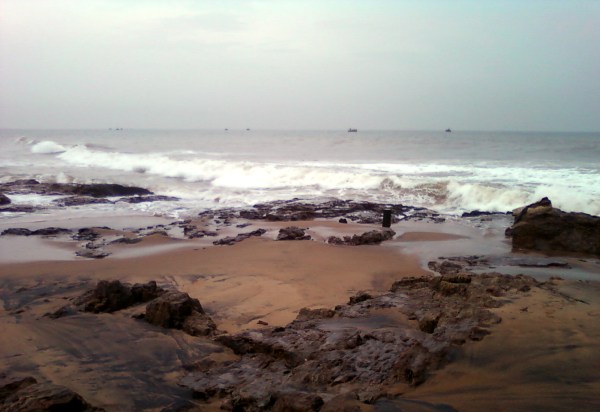
Wordsworth’s poem forced me to think about where “wise passiveness” occurs in the world. You might find it on a walk in spring, where the flowers bloom and glow beneath golden rays. Perhaps you might find it as you watch the clouds drift with the breeze. For me, it is when I’m sitting on a rock, overlooking a beach view on a rainy day. I love the way the rain smells as it hits the sentiment beneath me, how the waves roar into a white-wash yet the grey overtones make everything quiet, especially my mind. It is in these moments where I find I learn most about myself and what to do in situations. It allows me to delve deep into my own mind to pull from it rational thought, this is not something I can simply take from books and organised education.

This poem has not only given me significant insight into how one should approach learning about the world but also cemented my understanding of the enlightenment and romantic periods. I believe Wordsworth has perfectly encapsulated the two extremities in thought that occurred not only during these contrasting periods but today in our modern world. His poem stipulates that when there is a challenge ahead, we must enquire within our most inner-self through a process of “wise passiveness” to come to a reasonable conclusion. I believe as a society, we have a lot to learn from Wordsworth himself.

Image found at: https://www.google.com.au/search?q=beach+on+a+rainy+day&client=safari&hl=en-au&source=lnms&tbm=isch&sa=X&ved=2ahUKEwjJ-6H2357oAhXn6XMBHUefCXQQ_AUoAXoECA0QAw#imgrc=V3UzKACTbsQLCM

Quotes taken from: William Wordsworth’s poem ‘Wise Passiveness’.

Nan and Pop’s Garden

Write a poem about an experience in your life in which nature was the teacher.

There’s a certain familiarity 

that lingers outback in the green,

where the chain of hearts dance down  

to kiss the alovera leaves like that of a dream, 

in nan and pops garden. 


I think back to my childhood days 

sitting amongst it all, 

with nan and pop by my side 

a tea and iced vovo on call. 

The birds would whip 

and the rain would fall, 

in nan and pops garden. 


As I begin to reach a time

where my head is fogged and my heart is sore 

I come to the garden 

and let the roots of home reassure. 

Oh the love I have for nan and pops garden. 

I love the way that plants grow from boots and tea pots about 

And the lizards lay in slumber 

without any sort of doubt.

I love the way I feel 

when entangled in the love of nan and pops garden. 

My Nan and Pop’s Garden is extremely sentimental to me. However, it is only now that I truly realise my appreciation for the garden as it has been what has comforted me most in times of self-crisis. This garden has taught me that if you give back to nature and care for it like my Nan and Pop do, it is sure to give love and reassurance back to you.

Image take from: https://www.google.com/search?q=table+nd+chaor+in+a+peaceful+garden+&tbm=isch&ved=2ahUKEwiH-5niyYXpAhWBdisKHX6bCQoQ2-cCegQIABAA&oq=table+nd+chaor+in+a+peaceful+garden+&gs_lcp=CgNpbWcQAzoHCCMQ6gIQJzoCCAA6BQgAEIMBOgQIABBDOgYIABAFEB46BggAEAgQHjoICAAQCBAKEB46BggAEAoQGFCooAFYicsBYNPMAWgBcAB4AIABjgKIAYkzkgEHMC4yNS4xMJgBAKABAaoBC2d3cy13aXotaW1nsAEK&sclient=img&ei=NjmlXoeIOYHtrQH-tqZQ&bih=789&biw=1440#imgrc=blKbsLb4t8r10M

“Australia is not a Finished Product”

Throughout the duration of this unit I have been introduced to an array of Australian Literature that has enriched my understanding of Australia’s profound history. As well as this I have been able to comprehend the speciality of the Australian landscape and the intricate beauties that lay within our country. However, looking back on my blogs as well as the texts studied in class, I have ultimately come to realise the flawed historical and cultural complexities that have prevailed Australia over time and continue to do so to this present day. Thus, this has prompted me to believe that although we are on the right track, “Australia is not a finished product”.

The ideology that “Australia is not a finished product” is introduced in my first blog as I discuss Judith Wrights concept of “The Mountains Own Meaning” which can be interpreted as a place that withholds specific meaning for an individual. For this, I decided to write a creative piece about a childhood ice-rink that holds importance to me and that I would not like to see destroyed which can be found here:

https://thebestofliterature.art.blog/2019/08/18/the-rink/. However, while considering a place I would not like to see destroyed, I was urged to reflect on the meaning of the land to Indigenous Australians and how stripping them of this still affects Indigenous people today. Thus, highlighting the way in which “Australia is not a finished product” as Indigenous people are still being affected today.

In my second blog (which can be found at this link: https://thebestofliterature.art.blog/2019/08/26/a-tribute-to-dame-mary-gilmore/) I decided to write a tribute to Dame Mary Gilmore as she amplifies the treatment of women in Australian society through her poem “Eve’s Song”; an issue that still withholds prominence today. Gilmore’s particular way with words in her poem highlights her sheer bravery as she spoke with such assertion and conviction during a male-dominated period. In my blog I aim to bring this quality of Gilmore to light as I believe she truly articulates and sheds light on such a significant Australian issue. In creating this poem, Gilmore has taken a shot at deconstructing stereotypes while rearranging the typical Australia image of masculinity. The fact alone that Gilmore had to create this poem to deconstruct such issues and the way her poem still holds relevance for readers such as myself today highlights the way in which “Australia is not a finish product”.

In my third blog I catapulted myself into the writings of Patrick White. It is here that I critically analysed how his short story “Down at the Dump” reflects ideologies presented in his essay “The Prodigal Son” and in turn, demonstrates not only the issues in our society but how we can overcome these issues to move closer to a “finished product” of Australia. In my blog, I particularly focused on Whites exploration of materialism in Australian Suburbia; a shallow trait that unfortunately remains within our streets. This is explored in my fifth blog as I explore Lisa Bellear’s “Urbanised Reebocks. Bellear highlights the way in which materialistic items can take over one’s identity.  However, White exclaims that although there is this sense of materialism that we are so fixated on, it can be overruled by focussing on the ‘poetry’ and ‘mystery’ found in our simplistic Australian ways. Bellear idealises this in her poem as she removes her shoes (or materialised possessions) and comes in bare contact with the land, finding ‘poetry’ in her connection with it. I found myself practicing the art of focussing on the ‘poetry’ of simplistic Australian settings in our visit to the national art gallery which can be seen in my fourth blog; a poem about Brett Whitley’s painting of Sydney Harbour called a “Balcony 2”. In the poem I used a Ekphrasis style of writing to highlight the poetry found in the blue tones and sensual images of Sydney harbour. It is while going into detail about this painting that I realised I was not focused on anything other than the beauty of the image itself, demonstrating to me how accurate Patrick White is. This made me ponder, if everyone found this same ‘poetry’ in their simple Australian life perhaps we could begin to amend the issues that make our country incomplete.

To conclude, through exploring different pieces of Australian literature and engaging with these weekly blogs, I have come to realise the way in which “Australia is not a finished product”. Issues continue to circle around Australian society and affect individuals. Perhaps if we were to learn from the past and look into the ‘poetry’ as well as ‘mystery’ found in simple Australian ways we could begin to focus on the beauty within our country allowing us to move forward into a ‘complete’ Australia.

“America is a Nation of Paradoxes”

Before the duration of this unit, I perceived America to be a liberating nation and gave no deeper thought into this perception. However, as I have been catapulted into an abundance of American Literature, I have now come to realise that although it still remains an invigorating country, at its very core lies issues of racism, oppression, human turmoil and more bluntly – great sadness. Hence, allowing me to notice that America is in fact, “a nation of Paradoxes”, an ideology that has become increasingly prevalent throughout my blogs.

The realisation that “America is a nation of Paradoxes” begun in my first blog through the analysis of transcendentalist themes in Waldo Emerson’s essay ‘nature’. In this blog I focused on a particular line of the essay and  correlated it to a profound experience of my within nature which can be found at: https://thebestofliterature.art.blog/category/my-best-america-writing-blog/, allowing me to acknowledge the importance of nature. However, more than this, in exploring this text and writing this blog I have now come to notice that Emerson wrote in hopes of pushing his readers to revitalise and purify their soul through engaging with nature as societal constructions took control. Thus, this directly highlights the way in which “America is a nation of paradoxes” as Emerson makes it clear that America is not just the land of the free and – as there were clear issues within in society that needed to be addressed which is still prevalent to today’s American society.

In my second blog I decided to put my creative ability to the test and create a poem that reflected the writing of Emily Dickinson in which can be found at this link: https://thebestofliterature.art.blog/2019/09/05/the-return-of-the-sun/. In this poem I aimed to encapsulate Dickinson’s short stanza structure, use of the dash, rhyme as well as existential themes. Whilst reading over my blog it has come apparent to me that the structure and themes of Dickinson’s poem is what highlights the way in which “America is a nation of paradoxes”. By bringing forth existential themes that juxtapose the notion of ‘freedom’ in America, Dickinson directly illuminates the way in which “America is Paradox”. Hence, although America claims to be a liberating country, authors were still (and continue to) write with great sadness as the nation is infiltrated with major oppressions and corrupted systems, contrasting the ‘free’ country it presents itself as.

My third blog further highlights the way in which “America is a paradox” as I critically discuss these major oppressions and corrupted systems through Dubois concept of the “color-line”. As stated in my blog, to me the ‘color-line’ is a clear visualisation of the discrimination and segregation of African American people that had stemmed widely through America’s history through organised gangs and corrupted systems such as slavery. Thus, DuBois justifies the ideology that “America is a paradox” as he highlights that although America is supposedly a state of equal opportunity, beneath this surface level concept lies deep historical and cultural complexities. My fourth blog further laments this ideology and DuBois “color-line” as I discuss William Faulkner’s “As I lay dying”. Here I dissect Faulkner’s idea of the human heart being in constant battle with itself. I believe this battle of the heart is due to America being a paradox itself. Although the nation claims to revolve around freedom, the heart is trapped due to oppressions that surround it.

Finally, for my fifth blog I delved into modernism particularly looking at Ezra Pounds short poem “In a station of the metro”. This is another piece of literature that also demonstrates how paradoxical the United States is as Pounds illuminates the way people are stripped of their own identity due to technological advancements. Pound critiques the way humans are so fixated on the gloomy modernistic industrial creations around them, disregarding the natural world. In doing so, I realise that Pound truly highlights a major paradox within American society – that being the idea that wealth and advancements in society cannot actually bring happiness, instead these things are suppressive for American society.

To conclude my summary, over this semester through engaging with different pieces of American literature and the creation of my blogs, I have truly come to realise that “America is a nation of paradoxes”. I have always perceived the United States as a liberating and country and while this has not changed I have certainly come to see the deep historical and cultural complexities that lay deep within as well.

Blog at WordPress.com.

Up ↑

Design a site like this with WordPress.com
Get started