Blog Feed

20th or 21st Century? What’s the Difference.

The Twentieth Century gives me real insights into human and social issues that are still current in the 21st century.

The 20th century was a time of catastrophic events that lead to great social, political and cultural changes. During this era, writers wrote with conscious and sub-conscious experimentation as a result of their war-demolished surroundings. As I started to become familiar with works from the twentieth century and then wrote about them for my blogs, I came to the realisation that these issues still very well impact us today.

In my first blog I delved into an experience of mine that touched me more than an everyday ordinary experience. The purpose of this blog was to allow students to recognise how the events around them can shape their emotions and their writing which is what influenced many of the 20th Century writers. These writers sought to create pieces that captured the core of the experiences that occurred around them. As I wrote about an experience that struck me in my own life I came to realise how we still utilise our surroundings and the therefore, the issues around us as the basis of our writings. Thus, it is evident that concepts from the 20th century are still relevant in the 21st century.

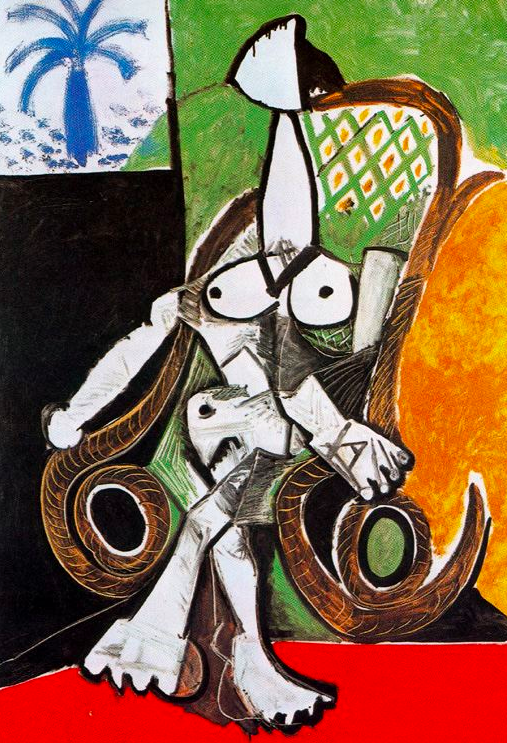
For my second blog I analysed the many layers of Picasso’s painting “Femme nue au fauteuil à bascule “. The painting depicts the distorted image of a woman sitting in a chair achieved through the layering of colours and textures. Through creating his piece in this jagged form, Picasso highlights the corrupt social and cultural backdrop of the time due to the effect of war. The painting acts as a physical representation of the human condition and depleting society during a horrific time. This still remains relevant to the 21st century as our society can still be viewed as corrupt and lacks cemented meaning. Human beings in this present day, like Picasso, are still very much influenced by what is happening in the world around them such as the coronavirus pandemic.

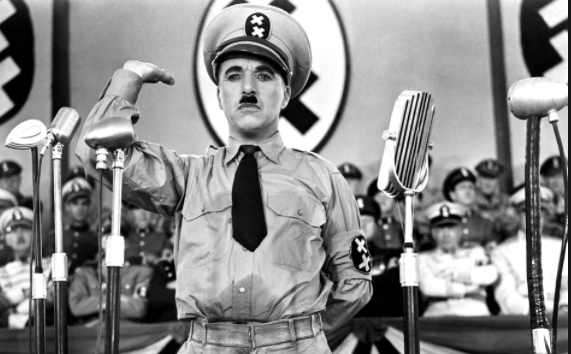
Continuing on with the influence of war, my third blog explores Charley Chaplin’s satirical mockery of Adolf Hitler in the film “The Great Dictator”. Chaplin breaks social and cinematic boundaries with his take on the leader. Through this characterisation, Chaplin highlights the absurdities of war and the detrimental impact of the wrong people in power. This ideology of destruction and – leaders can be recognised in the 21st century through leaders such as Donald Trump. A recent occurred which saw Sacha Cohen dressed up as Donald Trump to mock him at presidential rallies. This act ultimately lampooned Trump, representing his debated role as a leader and human being. Thus, illuminating the way in which issues and how they are dealt with, are evident within the 21st century.

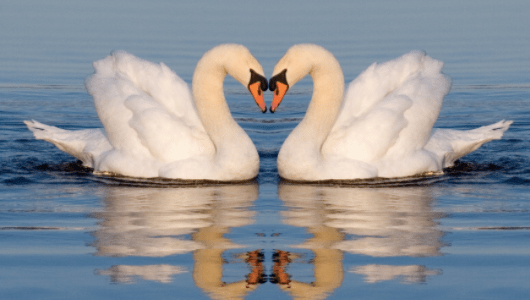
My fourth blog captures Yeats’ melancholy state due to the outcome of war in his poem “Wild Swans at Coole Park”. Yeats’ use of imagery to encapsulate the quest for beauty in a war-struck world highlights the vast destruction of war on the human condition and environment. Yeats’ highlights the way in which beauty is mortal in a changing world, especially in a world that is full of rejection and war. These themes cross over into the 21st century as beauty that could be found in the world is noticeably changing due to technological advancements.

Finally, my fifth blog, similarly to my Picasso blog, engages with the way in which writings of the 20th century were a product of their surroundings, in particularly the detrimental impact of war. In this final blog, I discussed the way in which modern society is also a product of its surroundings and how this is written about today. Therefore, reiterating that the way in which issues influenced writings of the 20th century also occurs or will occur in the 21st century and future generations to come.

Thus, the twentieth century has provided me with real insight into the issues that are still current in our modern society.
The Online World

Much of the literature of the 20th Century has been written in response to momentous events such as the first and second world wars. Draw up a short list of some of the momentous events that have been hitting our planet in the last 5 years and suggest a few ways in which writers might try to make sense of any one of these events. Your response to this suggestion, might itself be a piece of creative prose or poetry.

As we look back over the course of literature, we become entangled in wars, politics, cultural shifts, pain, love, nature and just about anything else you can humanely think of. I sit down to write these blog topics in the most creative way I can, but I become stumped – not because they are hard but because it seems I am not capable of creating anything that I feel has already been done before. This leads me to think about the issues that have prevailed the last five years and how they are going to be written about in a way that has not already been done.

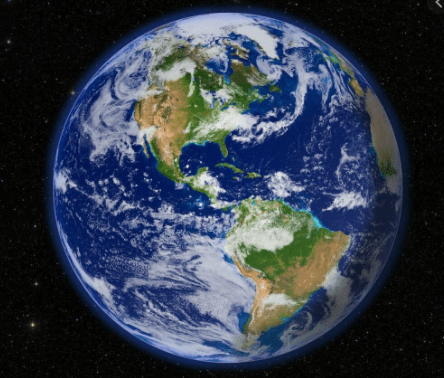
It’s not doubt that the last five years have been something catastrophic not only to the planet but to the human race in general. From fires to floods, global warming and coronavirus, we have endured a lot. How it is though that we are going to communicate these atrocities that differs from the past? We seem to live in a time where imitation has become a way of life, we follow and repeat. This may be looks, words, phrases, jokes, videos… we have become a society that thrives off assimilating into one another. It is almost as if you could say that our minds have become mirrors. How then, are we going to talk communicate these disasters and try to make sense of them if it is just the same thing over and over again. After putting a lot of thought into this, I guess that is exactly how – we as a modern society are going to come to terms with what has happened through social media and the internet. Through sharing ideas, poems, prose works, pictures, videos and artworks from our time online. We are living in a generational peak for communication. Everything will be archived and available for centuries to come. These moments will not be written down on spare pieces of paper in the middle of a trench and forced to survive, they will thrive and be shared worldwide.

I believe that’s how we are going to make sense of it – as a collective, sharing ideas on the internet and being accessible to it all. If we were to look at the coronavirus pandemic, we are going to try and make sense of this through one another, online. I’m almost positive it is going to get messy as facts are blurred and lies illuminated but nevertheless, we will turn to the online world for answers as we always do.

Peer Review 4

Evelyn’s Blog: https://literaturetalk.home.blog/2020/09/24/beauty-is-destructive/comment-page-1/?unapproved=49&moderation-hash=1289ae4c60fbf1e1e509c3eac50a8d14#comment-49

Hi Evelyn,
Wow, this is a very powerful piece. I completely resonate with your understanding of our modern world. We are becoming a world that is blind and it is truly sad. I love how you were true to yourself and your emotions, I think Yeats himself would respect this honesty. An eye opening statement for me was: “Many beautiful females self-destruct as they try to figure out ways to use their beauty”. ‘Beauty’ has always been and remains a driving force in society which I agree needs to change. I love that your piece is straightforward and blunt, it really allows you to delve right into the eye opening facts. I think to strengthen this post perhaps you could engage with quotes from Yeats poem a little more and potentially make the blog a little longer. Other than that, you have done a great job and I will certainly be thinking about this more from now on.

Peer Review 3

Teannie’s Blog: https://teannie.home.blog/2020/10/14/write-a-paragraph-that-continues-this-sentence-by-james-joyce-and-express-your-own-hopes-for-your-life/comment-page-1/?unapproved=52&moderation-hash=75f2b9efe7c4091d3a5bac52c82b1d27#comment-52

Hi Teannie,
I love this blog post! I think it would have to be one of the most inspirational blogs i have read whilst reviewing. I love how you are true to yourself and your emotions in this blog, I think it allows all readers to gain a true sense of who you are. I really resonate with your future endeavours for your students as I feel the exact same way. I think if you pass this sense of wisdom onto your students, you will make an incredible teacher! I love how you also capture that little bit of James Joyce in there too. You managed to bring your blog back to the class work while also writing from your perspective and I find that kind of hard to achieve! So you have done a great job in doing that. I think to strengthen this blog maybe you could read it out loud to yourself to make sure all the sentences flow. As well as this, as you make reference to Joyce, maybe you could have added a little but more of that intrinsic voice that you had been using through the rest of your blog. otherwise I honestly think this is an awesome blog and you are going to make an awesome teacher in the future!

The Wild Swans at Coole Park

Do any of Yeats’ poems connect with your own personal experience? Select one of Yeats’ poems (or a section thereof) and discuss how the poem connects with your own understanding of the world in which we live.

Yeats’ poem “The Wild Swans at Coole”, for me is one of his most significant pieces as it resonates with my personal understanding of the world in which we live. The poem follows the narrators two contrasting visits to Coole park to watch the swans swim in the pond. On his second trip, the narrator clings to the beauty of the swans in a changing, war-struck world.

In the first stanza of the poem, the narrator highlights the beauty of the natural scene in front of him during his first visit to Coole park. Utilising imagery he states: “Upon the brimming water among the stones are nine-and-fifty swans” (Yeats lines 5-6).  Here Yeats illuminates the beauty that can be found in the world, in particularly through the swans. Yeats further elaborates upon this natural beauty through the use of a metaphor in: “The bell-beat of their wings above my head” (line 17). Here Yeats compares the flapping of the swans’ wings to the sound of a bell, illuminating the rhythmic beauty of the swans. However, the tone of the poem changes as upon Yeats’ second trip to the pond as he exclaims: I have looked upon those brilliant creatures, And now my heart is sore” (line 13-14). Due to the context of the time, his heart is ‘sore’ but the swans remain “mysterious [and] beautiful”, while also still subject to change as is Yeats himself (line 26). Thus, the poem is a testament, cementing the ideal that the world is ever changing and even beauty that can be found is not permanent, suggesting Yeats’s pessimistic attitude due to his surroundings.

This connects with my own understanding of the world as I am constantly bombarded with images of beauty that is overridden by technological advancements. For example, I once had an amazing view of the waterfront from my apartment but overtime this view has been compromised due to a building being constructed right in front of the view. Therefore, demonstrating to me the way in which beauty is not mortal and changes overtime.

Perhaps this is something that we need to start re-evaluating.

Text referenced: The Wild Swans at Coole Park, W.B Yeats

Peer Review 1

Grace Mokdassi’s Blog: https://s00218159.home.blog/2020/08/21/an-extraordinary-ordinary-moment/

There is something about your piece that holds great resonance with me Grace. I was automatically drawn to the title. It’s a quirky yet extremely fitting one that encapsulates your whole blog. I think what I love most about your blog though is the way in which you have perfectly captured that feeling of being above it all, I can really feel the height in your work, both physically and metaphorically.

You have great imagery in there such as “God’s greatest creatures leap from the ocean”. I love how you have captured this moment but also would have liked to have read something about the flora as i’m sure there was lots of it! Perhaps describing in depth your surroundings in this paragraph could take us even more into bush with you!

I love when you wrote “that moment, standing on the brim of the land, the peak of our lives, means nothing to the world and everything to me”. Alike the title, I think your choice of contrasts from ‘nothing’ to ‘everything’ is effective in grasping how significant this moment truly was for you. I too adore hiking and sometimes don’t have the words to describe that sense of achievement and happiness that washes over me as I look out into the beauty of nature but you have done that here! It kind of made me delve even further and ponder those big cosmological questions. It’s awesome that you have been able to do that through your writing!

Peer Review 2

Anna Castagnella’s blog: https://literaturewithanna.art.blog/2020/08/10/golden/comment-page-1/#comment-73

Hey Anna,

Wow! You have really captured the true essence of the bliss that nature provides. As well as this I believe you have perfectly stylised the poem to align with Hopkins poetry while also keeping your own flare. I think what really affirms your own flare in this poem is the techniques you use such as alliteration; “beezs buzz” or “trees…twirl”. This makes your poetry sing and draws me into the moment with you as I am able to focus on these finer elements. I also love how you have made a connection between the nature and yourself by mentioning parts of the body and then adding the photo of yourself embracing nature. This to me was a nice touch as it gives the poem even more meaning to not only yourself but me as the reader.

I think another great touch was the small explanation you gave at the start stating how your poem is aligned with Hopkins work. I liked this because it allowed me to go into the poem and already know its connection to Hopkins so I could then focus on the poems relation to you.

All in all, I really like this poem and think you have done a great job!

A Picasso Cake

Describe the Picasso painting above. In other words paint his picture IN WORDS. Say briefly what makes it “modernist”.

Pablo Picassos’s painting “Femme nue au fauteuil à bascule “. Like many of Picassos pieces, my eyes don’t know where to look first. The colours, the distorted shapes, textures and random images burst from the canvas.  Gazing at it is like a child going to the carnival for the very first time; overwhelming yet spectacular. Primarily, it may seem incomprehensible. One could almost say it’s like a cake. A bountiful of flavour-some ingredients mixed together that at first appear to be a gooey, sometimes grainy, sloppy puddle. However, eventually with time and cooking it becomes a sweet cake. Just as in time, Picassos ‘ingredients’ have created the perfect testament to the modernist period, the perfect ‘cake’.

The colouring is the first ingredient that can be drawn from the painting. The harsh contrast of the black aside the bright tones of the orange, green and blue against the white creates a vibrant backdrop and sets our eyes towards the figure.  A blue palm tree sits in the left-hand corner of the piece, appearing isolated from the rest of the painting. Around the white figure are two swirling brown shapes that look almost like a snake; all while sitting atop a bright red floor. Although the use of these colours seem obscure, Picassos particular choice of such invigorating tones alludes’ to a time of great change and experimentation. One in which strays from tradition and aims to shock viewers in order to receive a response; a typically modernist concept.

As you peer your eyes more deeply into the image, various shapes form and textures come alight. The title translates to ‘woman naked in armchair to the scale’, however at first one might not see this as they are distracted by the colours and its peculiar shapes. While delving deeper into it, one can make out the brown swirls to be the head of an armchair and the white to be a figure of a woman. The textures of the piece also aid in identifying these aspects of the painting as the armchair is carved with fine lines indicating a decorative piece and the woman is etched with smeared black paint, highlighting the figure. As well as this, the colours of the backdrop not only vary in colour but also grain, illuminating the distorted presentation of the woman. It is evident that all ‘ingredients’ of the painting are fragmented and collaged. The body parts of the woman are not in order, the colours and textures are confronting and the armchair is created in an odd shape. Looking at the way in which these elements have been crafted on the page gives insight into the modernist period. The fragmentation and sense of disorder it conveys is suggestive of the declining state of society (which makes sense being created on the cusp of war). As the woman is painted with faded black ink and her body doesn’t align, she represents human destruction. Moreover, the armchair can see be analysed as a symbolic notion, highlighting negative materialistic ideologies.

All in all, as one analyses these elements or ‘ingredients’ it is evident that Picassos painting becomes the perfect cake or more specifically, the pinnacle of modernist ideology.

Image taken from: Micheal Griffith’s WordPress site

The Great Dictator

How effective do you think Charlie Chaplin was with his creative challenge to the war?

Charlie Chaplin (1889-1977) broke both societal and cinematic boundaries with his creative take on the war within his film The Great Dictator. Set on the circumference of WWII, the film showcases Chaplin as a satirical version of Adolf Hitler who, in the movie is characterised as Adenoid Hynkel. Through the representation of Hitler in such a light during his reign, Chaplin innovatively challenges notions of war and human destructivity, highlighting that war is in fact, a ridiculous outcome of the wrong people in power.

Within the film, Chaplin utilises a clown-like form of acting to Lampoon Hitler and therefore provide a direct critique of war and the destructive nature of human beings. This can be recognised within a scene in the film in which a cannon is being loaded with a missile on target to destroy the Notre Dame. As the missile is set to fire, it falls out of the cannon and rolls away in a comedic way, indicating the fail of the launch. This can be seen as a metaphor for the degressive nature of war and further illuminates Hilters flawed morals. Moreover, as the dysfunctional missile lays on the ground, Hynkel is sent to check its fuses. As he approaches the missile it spins as if following his moves. This frightens Hynkel, causing him to run around in circles to dodge the missile. Through this scene, it can be speculated that Chaplin is critiquing the way in which this war was a product of this corrupt leader and that when faced with the possibility of being hit by the missile himself, he is scared. Therefore, directly emphasising upon Hitlers selfishness and hypocrisy. As a result, it can henceforth be argued that Chaplin’s comedic approach effectively challenges the idea of war.

In contrast to this, the Dictator’s speech provides yet another creative layer to the film that works to challenge the notion of war. At the end of the film, Chaplin as Hynkel gives a moving speech on the catastrophes of war. Chaplin utilises emotive speech and hand gestures along with an accompanying score to create a powerful cinematic moment. However, the beauty behind this scene lays within its ability to produce a sense of irony as this speech on peace is being given by the creator of the war himself, Hiter. As Chaplin places moments of comedy and ends with this serious scene, he is able to effectively critique the war as ridiculous yet also advocate for its end.

Thus, through moments of comedy layered with serious tones, Chaplin’s film creatively challenges the idea of war and the destruction that humans bring to one another greatly.

Film referenced: The Great Dictator.

Photo taken from: Google Images

Three Words And A Wedding

Describe an experience in your own life where you seem to have touched something much deeper than your ordinary everyday experience.

It’s not everyday that a girl my age gets to MC a wedding. Sure, I agreed to do it knowing well and true the complete significance of the day for the couple but it didn’t strike me that this day, would engrave itself in my soul for life.

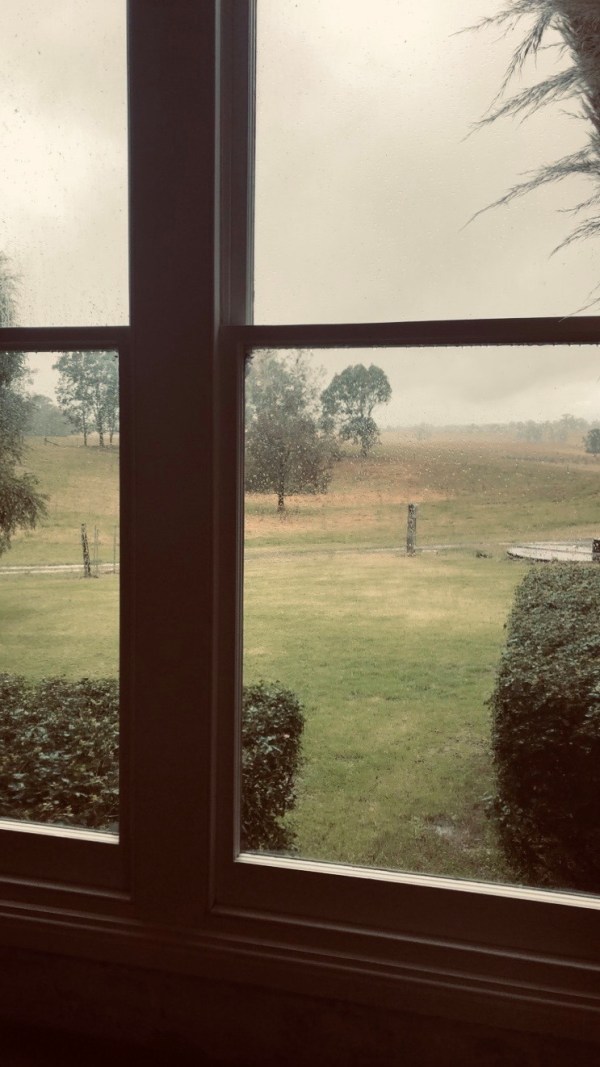
30th of August, 2019. Seas of rolling green dotted with grazing cattle and Australian bush merged into one blur outside of my passenger window. I couldn’t tell if this churning feeling inside of my stomach was nervousness or excitement, maybe a mix of both. The rain began to fall a little heavier, tinting the image on the other side of the glass but not staining its beauty in the slightest. As I step outside I am hit with the sweet saviour of mildewed meadows and aged oak. What a sight for sore eyes – that’s until I am greeted by flying makeup brushes and popped champion by a very nerve-struck bride to be. Before we know it, it’s go time.

I’ve never felt more comfortable than I did in this moment, with hundreds of peering eyes waiting for what I had to say next. I grew very familiar with the microphone that night as it begun to mould perfectly into the shape of my palm. All had seemed to be going well, people laughing, crying and coming together as one. Then a magic moment speared me right through the heart – the maid of honours speech. As she described life long memories and her love for the bride I glanced over to my best friend, who with one tear rolling down her face and an unforgettable pout uttered the words “I love you” from the other side of the room. A love like no other filled me whole in this moment, an almost indescribable feeling. I was ambushed as memories soared through me, good and bad. I couldn’t help but think about how this one person had been my rock through it all and remains that way to this second. On this very day, I came to realise the real meaning of love, happiness and friendship, a feeling so much stronger than I had ever felt before.

We continued to dance into the night. Eventually it was just her and I left on the floor, singing our hearts out to old tunes and laughing like we never had before. It was this very day, the 30th of August that my heart was branded with a forever lasting friendship. It was on this day that I realised, the true power of three very simple words, I love you.

Image – taken by myself at the wedding location.

Blog at WordPress.com.

Up ↑

Design a site like this with WordPress.com
Get started