“America is a Nation of Paradoxes”

Before the duration of this unit, I perceived America to be a liberating nation and gave no deeper thought into this perception. However, as I have been catapulted into an abundance of American Literature, I have now come to realise that although it still remains an invigorating country, at its very core lies issues of racism, oppression, human turmoil and more bluntly – great sadness. Hence, allowing me to notice that America is in fact, “a nation of Paradoxes”, an ideology that has become increasingly prevalent throughout my blogs.

The realisation that “America is a nation of Paradoxes” begun in my first blog through the analysis of transcendentalist themes in Waldo Emerson’s essay ‘nature’. In this blog I focused on a particular line of the essay and  correlated it to a profound experience of my within nature which can be found at: https://thebestofliterature.art.blog/category/my-best-america-writing-blog/, allowing me to acknowledge the importance of nature. However, more than this, in exploring this text and writing this blog I have now come to notice that Emerson wrote in hopes of pushing his readers to revitalise and purify their soul through engaging with nature as societal constructions took control. Thus, this directly highlights the way in which “America is a nation of paradoxes” as Emerson makes it clear that America is not just the land of the free and – as there were clear issues within in society that needed to be addressed which is still prevalent to today’s American society.

In my second blog I decided to put my creative ability to the test and create a poem that reflected the writing of Emily Dickinson in which can be found at this link: https://thebestofliterature.art.blog/2019/09/05/the-return-of-the-sun/. In this poem I aimed to encapsulate Dickinson’s short stanza structure, use of the dash, rhyme as well as existential themes. Whilst reading over my blog it has come apparent to me that the structure and themes of Dickinson’s poem is what highlights the way in which “America is a nation of paradoxes”. By bringing forth existential themes that juxtapose the notion of ‘freedom’ in America, Dickinson directly illuminates the way in which “America is Paradox”. Hence, although America claims to be a liberating country, authors were still (and continue to) write with great sadness as the nation is infiltrated with major oppressions and corrupted systems, contrasting the ‘free’ country it presents itself as.

My third blog further highlights the way in which “America is a paradox” as I critically discuss these major oppressions and corrupted systems through Dubois concept of the “color-line”. As stated in my blog, to me the ‘color-line’ is a clear visualisation of the discrimination and segregation of African American people that had stemmed widely through America’s history through organised gangs and corrupted systems such as slavery. Thus, DuBois justifies the ideology that “America is a paradox” as he highlights that although America is supposedly a state of equal opportunity, beneath this surface level concept lies deep historical and cultural complexities. My fourth blog further laments this ideology and DuBois “color-line” as I discuss William Faulkner’s “As I lay dying”. Here I dissect Faulkner’s idea of the human heart being in constant battle with itself. I believe this battle of the heart is due to America being a paradox itself. Although the nation claims to revolve around freedom, the heart is trapped due to oppressions that surround it.

Finally, for my fifth blog I delved into modernism particularly looking at Ezra Pounds short poem “In a station of the metro”. This is another piece of literature that also demonstrates how paradoxical the United States is as Pounds illuminates the way people are stripped of their own identity due to technological advancements. Pound critiques the way humans are so fixated on the gloomy modernistic industrial creations around them, disregarding the natural world. In doing so, I realise that Pound truly highlights a major paradox within American society – that being the idea that wealth and advancements in society cannot actually bring happiness, instead these things are suppressive for American society.

To conclude my summary, over this semester through engaging with different pieces of American literature and the creation of my blogs, I have truly come to realise that “America is a nation of paradoxes”. I have always perceived the United States as a liberating and country and while this has not changed I have certainly come to see the deep historical and cultural complexities that lay deep within as well.
America Writing Peer Review 4

Blog by: Brandon Ng. https://newyorker.home.blog/2019/09/06/a-bird-came-down-the-walk/

Hi Brandon! I really enjoyed this poem. The simplicity of your poem is what struck me the most. I can picture the simple and slight movements of the bird itself and the innocence that lay within in. I think you have captured perfectly a minimalist style with the simple movements of the bird. Through the use of rhyme as well, the peaceful tone of the poem is evident. I believe to strengthen your blog you could perhaps make it a bit longer to give it some more depth. As well as this, Perhaps the use of a visual aid could really make this poem pop! Other than that, I think your choice of wording and peaceful concept made it such an easy and enjoyable piece to engage with. Keep up the good work!

Ezra Pounds “In a Station of the Metro”

Select the one modernist poem or text that you found spoke to you most directly. Quote the text and tell us how the text moved you.

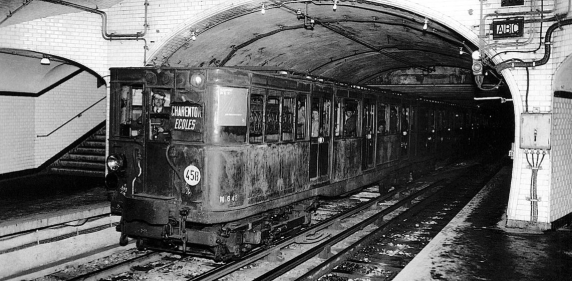
During our exploration into modernism, we delved into poetry by the modernist poet, Ezra Pound. In particularly we focused on his poem, “In a station of the metro” in which out of all pieces we read throughout this topic, resonated with me most. The poem itself only consists of two lines but the modern minimalistic style is what I believe amplifies it’s meaning the most. The poem reads as:

“The apparition of these faces in the crowd;

Petals on a wet, black bough.”

Despite being rather short, the stark contrasts and visual imagery that the poem is able to produce astounds me. This contrast is evident through pounds particular use of “apparition” to describe the faces, juxtaposing the poignant and colourful imagery of “petals on a wet, black bough” (In a station of the metro). Through choosing to describe the people as ‘ghost-like’ within the bustling crowd of a metro, Pound comments on the negative impact of man-made industrialisations on humanity. Pound further cements this negative ideology of the impact of man-made items on humans as he compares the faces to wet petals on a black branch. When I first read this line immediately my mind was infiltrated with the visualisation of flowers sticking to a tree; their colour illuminated against the black back drop. This image aligns with that of ‘the ghost-like’ faces in the black darkness of a metro as humans ‘stick’ to that of their own industrialised creations. Furthermore, by creating this image and contrasting it with scenes of the natural environment, Pound identifies the cyclical nature of humanity, much alike petals growing on a tree. In creating this image, I believe pound comments on the way in which humans float through life obliviously amongst one another, focusing only on the future industrialised society as opposed to the natural world.

Pounds ability to capture such rich meaning in only two lines in what thus, moves me the most about this poem. He is able to articulate the cyclical nature of human beings through a technologically developing world, commenting on their lack of focus for the natural world in only a space of two lines. Everything down to Pound’s grammar and tight knit choice of wording aided in producing the significant meaning of this poem, highlighting the power of words themselves in which what truly moves me most.

Feature Image: Metro taken from google images https://www.google.com/search?biw=1440&bih=789&tbm=isch&sxsrf=ACYBGNSJf-gUuHCTEnfbtxBbsl9FIfojSQ%3A1571204545902&sa=1&ei=wa2mXbzZNqqCrtoPi-OO6A0&q=+1913+metro&oq=+1913+metro&gs_l=img.3..35i39.5202.5421..6136…0.0..0.305.563.2-1j1……0….1..gws-wiz-img.21qqccysOKE&ved=0ahUKEwj8vc-GiaDlAhUqgUsFHYuxA90Q4dUDCAc&uact=5#imgrc=Jqd_cj6iGhd8YM:

America Writing Peer Review 3

Blog by: Nancy David. https://nancysliteratureblog.home.blog/2019/09/15/blog-3-a-letter-to-james-baldwin/

Hi Nancy! I really enjoyed this blog entry. To me, this seemed like a true professional and well written letter. I really enjoyed how you incorporated more than one of Baldwins texts to support the way in which he widely demonstrates the severity of racism and discrimination. I can see through this letter how much his works have impacted your understanding of these issues and the power of Baldwins writings; I also feel the same way! I particularly like how you wrote “There is power, conviction and logic in your writing, which portrays a sense of realism, suffering and describes the discriminations experienced by the African American communities”. This blog truly encapsulates the sense of logic and realism through your choice of wording in which is also seen in baldwins works. I think perhaps by incorporating some textual evidence from the writings you have referenced could strengthen you blog even more so! Other than that, I really enjoyed this, keep up the good work!

William Faulkner’s Nobel Prize Speech

How do you understand Faulkner’s extraordinary statement in his Nobel Prize speech “the problems of the human heart in conflict with itself … alone can make good writing because only that is worth writing about, worth the agony and the sweat” ?

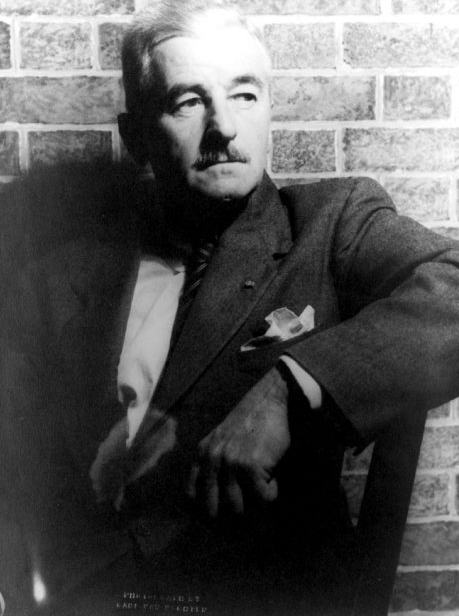
To me, Faulkner’s statement emphasises the fact that great pieces of writing are a product of one’s intrinsic selves and deep emotions embedded within. He articulates that the ‘human heart’ is in battle with itself. In the context of Faulkner’s time, that being post World War II, I believe that this battle within the heart is the constant shift between ‘agony’ and compassion. People during the time of this speech were caught between a world of lingering death and rising above these tragedies. They wrote from of a place of sheer fear and emotional turmoil due to the catastrophes in front of them. It is these experiences that have created a shift in perspective in the way in which people see the world. Faulkner highlights in his speech that this turmoil and experience create the basis of powerful writing. However, although this can be true as our emotions allow us to delve deeper into our conscious and produce something that is meaningful, he continues to argue in his noble prize speech that this emotional turmoil should not always be the basis of writings as it forces one to “write[s] not of love but of lust…without pity or compassion” (William Faulkner, Nobel Prize speech). I believe that Faulkner expresses that although the agony and sweat of these experiences are worth the powerful pieces of literature they provide, I believe that he further aims to resonate that real great literature lays within one’s ability to realise that the perseverance of this agony and sweat can lead to more than writings of conflict– it can lead to writings of hope if we allow it to do so.

Feature image: William Faulkner taken from google images https://www.google.com/search?biw=1440&bih=789&tbm=isch&sxsrf=ACYBGNSiM3B0IJ3187E7lPy2wBNDl7SCwQ%3A1571204560335&sa=1&ei=0K2mXb6LFNf-rQG65JmADg&q=william+faulkner&oq=william+faulkner&gs_l=img.3..0l10.171629.177330..177447…2.0..0.1312.9834.3-7j1j4j0j4……0….1..gws-wiz-img…..10..35i362i39j0i131j0i67j0i10i24.zE7HmGBEeEY&ved=0ahUKEwi-s8CNiaDlAhVXfysKHTpyBuAQ4dUDCAc&uact=5#imgrc=v8Jx1HVHrPAWoM:

America Writing Peer Review 2

Blog by: Maria Lo Campo. https://marialocampo.wordpress.com/2019/09/10/american-literature-blog-2/

Hi Maria, I think you have written a great blog here! I particularly like the way in which you gave some context into Whitman’s work regarding his admiration for Abraham Lincoln. This clearly pointed out to me why it is that Whitman saw Lincoln as a ‘captain’. I really like how you have drawn out certain quotes and bolden them to further to prove your point. I have to agree with you and say that I do really think that repetitive nature of the quote ‘O’Captain my Captain’ accentuates his admiration for him as president. I think perhaps to strengthen your response you could by place in literary techniques to back your quotes and further elaborate upon them. Besides from that, I think that your blog was clear and got to the point as to why you think Whitman feels so highly of Abraham Lincoln! Keep up the good work!

Du Bois and the ‘color-line’

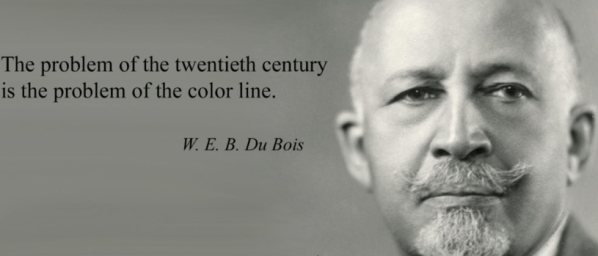
DU BOIS “The problem of the Twentieth Century is the problem of the color-line”. What do you think Du Bois means?

I believe that when Du Bois stated: “The problem of the Twentieth Century is the problem of the colour-line”, he simply and accurately articulated the ideology that the problem of the twentieth century lays within the disunity between races. For me, the statement gives me distinct imagery of a physical line and on opposing sides of that there are two different races; European and African Americans or more bluntly; white and black skin tones. Du Bois highlights that consequently due to this line, African Americans are still targets of discrimination. Moreover, the knowledge I have gained from the unit American writing has allowed me to comprehend and put into perspective why this line and therefore discrimination may exist and still does exist to this day. I have come to the conclusion that the colour-line derives from the social and political inequalities amongst the races. This stems from slavery and white supremacy. However, although these inequalities have been fought against, there is still a profound discrimination residing. This therefore allowed me to question why it may be that even after clear preaching of African Americans for equality, there is still racism. Could this be because it is in human nature for there to be continuous conflict? I Believe that when Du Bois stated this quote, he posed this exact question, urging readers to consider one’s own moral compass and question the way in which we allow history to define our present. As Du Bois resonates these questions, I cannot help but to think of when the ‘line’ itself may break and how this would occur. It is thoughts like this and ideologies stemmed from the idea of the ‘colour-line’ that are needed to move forward in society, hence making Du Bois and his writings a pivotal part of the world.

Feature image: W.E.B DuBois with his famous quote taken from google images https://www.google.com/search?q=du+bois+and+the+colour+line&sxsrf=ACYBGNQbP-zis-BSVzgiAzKWxYm0e5JzNA:1571205166762&source=lnms&tbm=isch&sa=X&ved=0ahUKEwjF7tWui6DlAhUMfysKHeu_AL8Q_AUIEigB&biw=1440&bih=789

America Writing Peer Review 1

Blog by: Victoria Martin. https://victoriamartin.art.blog/2019/08/31/a-narrow-fellow-in-the-grass-remastered/

I really like this poem, Victoria! I think you have really encapsulated the essence of Emily Dickinson! I think this poem is very rich and deep in meaning. I agree with your perspective and honestly think that Dickinson would too! I think in today’s in modern day society with the boom of technology you are completely right to say that some lack character or sense of self because we have become a society so focused on reflecting those we see on social media or being better ‘than’. I think it is also interesting to look at the theme of your poem and think about what our modern day world would look like through the eyes of Emily Dickinson. Considering Dickinson seemed to value human and the perspective of death so heavily as you stated, i think if she were to see our world today with this rise and and addiction to social media she would have even more to say! For your next poem you write, if you choose to do one, i think maybe showing the distinct stanza’s would really add to the effect of your poem! Good job!

The return of the Sun

 I cannot live without you -  
Breathing is ever so sour, suddenly.  
Sphere in the sky, how you glow like the raven’s eye.
Separation is deprivation of the soul.
 
The key to my intrinsic door –
How you look straight through me,  
Even if you don’t know me anymore –
Change is inevitable - which I know you can see.
 
Glowing warmth, bright and safe –
You return to me - in my time of need,
You bring the colour back to my hair,
You re-plant me so - like a thriving seed.
 
Please don’t leave again – old friend.
I need you to stay and light my soul,
I want to bask beneath your golden rays,
And soak you up – entirely and whole.
 
 
SIDE NOTE: I hope you all enjoy my poem ‘Return of the Sun’. I have been inspired by the recent golden weather.  I hate as the sun descends in the night, which brings the moon out, as I believe (perhaps like Dickinson would) this is when I ponder most about the world and myself as it's quiet as opposed to the day.

As well as existential ideologies, I have also attempted to capture the essence of Emily Dickinson's form. I have tried to incorporate Rhyme, short stanzas, the use of the dash as well as imagery which is inspired to me by Dickinson's poem "I taste a liquor never brewed".

Feature image: The sun and the cycle of life taken from google image https://www.google.com/search?biw=1440&bih=789&tbm=isch&sxsrf=ACYBGNSkG-SXMRr7O4Ltsc0BlvdKxKlDhw%3A1571206484661&sa=1&ei=VLWmXaqCKNq_9QPJi6zwDw&q=the+sun+black+and+white+artwork+&oq=the+sun+black+and+white+artwork+&gs_l=img.3…7572.14581..14818…1.0..0.362.6224.0j14j9j5……0….1..gws-wiz-img…….35i39j0j0i8i30j0i24j0i30.M-n6ju5p3bA&ved=0ahUKEwiq_IujkKDlAhXaX30KHckFC_4Q4dUDCAc&uact=5#imgrc=r_08_T_sd5XaeM:

The Soul of Pearl Beach

Chose a phrase or a sentence from Emerson’s essay “Nature” that really struck you as being accurate to your own experience of nature. Write a paragraph that captures an experience of nature of your own that supports what you understand to be Emerson’s vision of nature

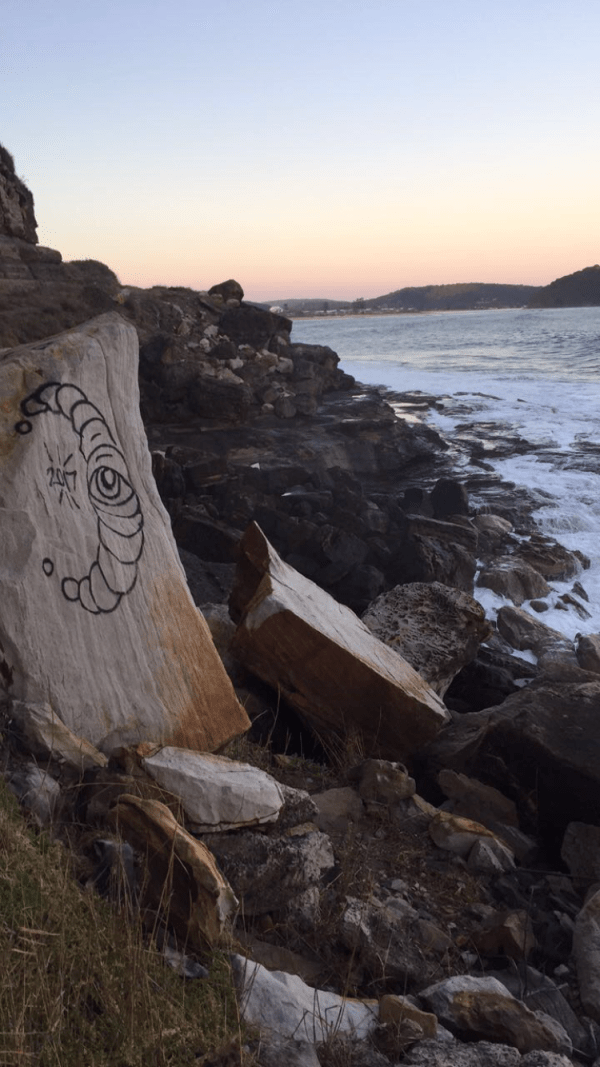
My entire body began to ring as the final bell shot through me, signalling the end of my high school life. My mind was racing; and it wasn’t long before my legs followed, taking me all the way to the one place that comforts me the most. As I walked through the prickly off-bush trail along the coast-line of pearl beach I found myself hypnotised as the waves bubbled over the sun-kissed formations, rolling in and out, in and out. I stopped for a minute, allowing my asthmatic ridden lungs to absorb the sea air and my breath to fall in time with the slow rolling of the waves. As I continued to walk the trail, memories beyond memories rushed over me. A single arching rock that protruded from the depths of the sand like a weed that had pushed itself through the cracks of concrete, yet so out of place brought me the most- sweetest of memories. I am transported back to my best friends 16th birthday where a fire crackled beneath the arch of the rock and the stars glistened the water below. It was a peaceful night with nothing but youthful love and hearty laughs. I remember the roar of the waves crashing against the rocks snapping me back into the present time as the sun began to set, emanating perfect brush-strokes of pinks and purples against the portrait of the skies. As I turned to leave this picturesque wonder, a spray-painted eye on an oddly shaped rock captured my attention. It seemed to fit flawlessly into the image that was being painted before me. I took a minute to take this sight in and absorb every part of it before I snapped a picture and walked away; leaving behind me yet another memory and piece of myself for the nature to inhale to play back for me on another day.

Emerson states within his essay ‘Nature: “Who looks upon a river in a meditative hour, and is not reminded of the flux of all things? Throw a stone into a stream, and the circles that propagate themselves are the type of all influence” (ch.IV). This particular part of Emerson’s essay resonated with my experiences as I  believe what Emerson is articulating here is that we are a part of nature and nature is a part of each and every one of us. Keeping this concept in mind I think back to that last day of school and wonder why it was that I was drawn to the nature during this monumental moment. Was it because I knew that this place was a part of me? Perhaps I knew that nature would take this memory and hold onto it for me? As I now live in the city, I have become used to the bustling concrete jungle that I now call home, however, it does not make me feel the same emotions as I do when standing on the coast line of pearl beach looking into the horizon. As I think back to that eye staring back at me, I see my own consciousness within it. It is almost as if this eye represents my own third eye as the nature whispers back to me in our own language the memories of my entire youth embedded within every nook and cranny of the natural elements. I believe that Emerson was saying that this is the exact kind of connectedness we should aim to achieve. Nature grabs parts of our soul and latches onto it, keeping it tightly sealed for those moments when we feel drawn to run back to it.

Emerson, Waldo Ralph. “Nature”. American Transcendentalism Web, https://archive.vcu.edu/english/engweb/transcendentalism/authors/emerson/essays/naturetext.html, accessed August 20th, 2019.

Feature image: Pearl beach – Taken by myself

Blog at WordPress.com.

Up ↑

Design a site like this with WordPress.com
Get started