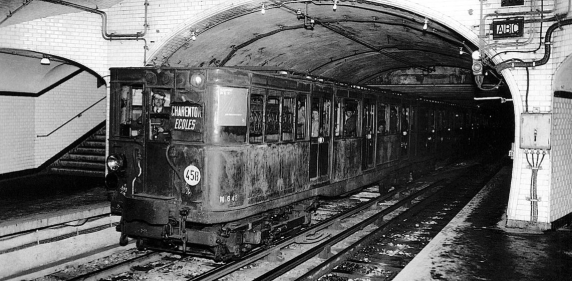
Ezra Pounds “In a Station of the Metro”

Select the one modernist poem or text that you found spoke to you most directly. Quote the text and tell us how the text moved you.

During our exploration into modernism, we delved into poetry by the modernist poet, Ezra Pound. In particularly we focused on his poem, “In a station of the metro” in which out of all pieces we read throughout this topic, resonated with me most. The poem itself only consists of two lines but the modern minimalistic style is what I believe amplifies it’s meaning the most. The poem reads as:

“The apparition of these faces in the crowd;

Petals on a wet, black bough.”

Despite being rather short, the stark contrasts and visual imagery that the poem is able to produce astounds me. This contrast is evident through pounds particular use of “apparition” to describe the faces, juxtaposing the poignant and colourful imagery of “petals on a wet, black bough” (In a station of the metro). Through choosing to describe the people as ‘ghost-like’ within the bustling crowd of a metro, Pound comments on the negative impact of man-made industrialisations on humanity. Pound further cements this negative ideology of the impact of man-made items on humans as he compares the faces to wet petals on a black branch. When I first read this line immediately my mind was infiltrated with the visualisation of flowers sticking to a tree; their colour illuminated against the black back drop. This image aligns with that of ‘the ghost-like’ faces in the black darkness of a metro as humans ‘stick’ to that of their own industrialised creations. Furthermore, by creating this image and contrasting it with scenes of the natural environment, Pound identifies the cyclical nature of humanity, much alike petals growing on a tree. In creating this image, I believe pound comments on the way in which humans float through life obliviously amongst one another, focusing only on the future industrialised society as opposed to the natural world.

Pounds ability to capture such rich meaning in only two lines in what thus, moves me the most about this poem. He is able to articulate the cyclical nature of human beings through a technologically developing world, commenting on their lack of focus for the natural world in only a space of two lines. Everything down to Pound’s grammar and tight knit choice of wording aided in producing the significant meaning of this poem, highlighting the power of words themselves in which what truly moves me most.

Feature Image: Metro taken from google images https://www.google.com/search?biw=1440&bih=789&tbm=isch&sxsrf=ACYBGNSJf-gUuHCTEnfbtxBbsl9FIfojSQ%3A1571204545902&sa=1&ei=wa2mXbzZNqqCrtoPi-OO6A0&q=+1913+metro&oq=+1913+metro&gs_l=img.3..35i39.5202.5421..6136…0.0..0.305.563.2-1j1……0….1..gws-wiz-img.21qqccysOKE&ved=0ahUKEwj8vc-GiaDlAhUqgUsFHYuxA90Q4dUDCAc&uact=5#imgrc=Jqd_cj6iGhd8YM:
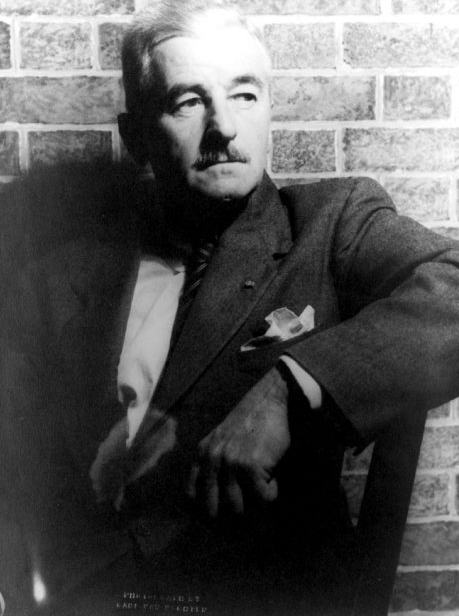
William Faulkner’s Nobel Prize Speech

How do you understand Faulkner’s extraordinary statement in his Nobel Prize speech “the problems of the human heart in conflict with itself … alone can make good writing because only that is worth writing about, worth the agony and the sweat” ?

To me, Faulkner’s statement emphasises the fact that great pieces of writing are a product of one’s intrinsic selves and deep emotions embedded within. He articulates that the ‘human heart’ is in battle with itself. In the context of Faulkner’s time, that being post World War II, I believe that this battle within the heart is the constant shift between ‘agony’ and compassion. People during the time of this speech were caught between a world of lingering death and rising above these tragedies. They wrote from of a place of sheer fear and emotional turmoil due to the catastrophes in front of them. It is these experiences that have created a shift in perspective in the way in which people see the world. Faulkner highlights in his speech that this turmoil and experience create the basis of powerful writing. However, although this can be true as our emotions allow us to delve deeper into our conscious and produce something that is meaningful, he continues to argue in his noble prize speech that this emotional turmoil should not always be the basis of writings as it forces one to “write[s] not of love but of lust…without pity or compassion” (William Faulkner, Nobel Prize speech). I believe that Faulkner expresses that although the agony and sweat of these experiences are worth the powerful pieces of literature they provide, I believe that he further aims to resonate that real great literature lays within one’s ability to realise that the perseverance of this agony and sweat can lead to more than writings of conflict– it can lead to writings of hope if we allow it to do so.

Feature image: William Faulkner taken from google images https://www.google.com/search?biw=1440&bih=789&tbm=isch&sxsrf=ACYBGNSiM3B0IJ3187E7lPy2wBNDl7SCwQ%3A1571204560335&sa=1&ei=0K2mXb6LFNf-rQG65JmADg&q=william+faulkner&oq=william+faulkner&gs_l=img.3..0l10.171629.177330..177447…2.0..0.1312.9834.3-7j1j4j0j4……0….1..gws-wiz-img…..10..35i362i39j0i131j0i67j0i10i24.zE7HmGBEeEY&ved=0ahUKEwi-s8CNiaDlAhVXfysKHTpyBuAQ4dUDCAc&uact=5#imgrc=v8Jx1HVHrPAWoM:

Du Bois and the ‘color-line’

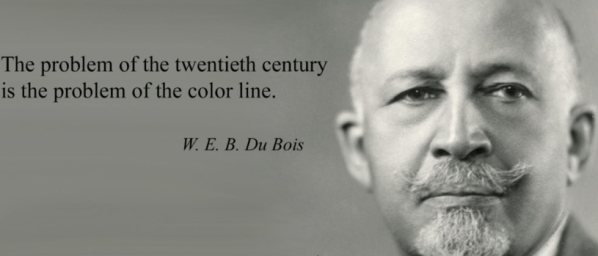
DU BOIS “The problem of the Twentieth Century is the problem of the color-line”. What do you think Du Bois means?

I believe that when Du Bois stated: “The problem of the Twentieth Century is the problem of the colour-line”, he simply and accurately articulated the ideology that the problem of the twentieth century lays within the disunity between races. For me, the statement gives me distinct imagery of a physical line and on opposing sides of that there are two different races; European and African Americans or more bluntly; white and black skin tones. Du Bois highlights that consequently due to this line, African Americans are still targets of discrimination. Moreover, the knowledge I have gained from the unit American writing has allowed me to comprehend and put into perspective why this line and therefore discrimination may exist and still does exist to this day. I have come to the conclusion that the colour-line derives from the social and political inequalities amongst the races. This stems from slavery and white supremacy. However, although these inequalities have been fought against, there is still a profound discrimination residing. This therefore allowed me to question why it may be that even after clear preaching of African Americans for equality, there is still racism. Could this be because it is in human nature for there to be continuous conflict? I Believe that when Du Bois stated this quote, he posed this exact question, urging readers to consider one’s own moral compass and question the way in which we allow history to define our present. As Du Bois resonates these questions, I cannot help but to think of when the ‘line’ itself may break and how this would occur. It is thoughts like this and ideologies stemmed from the idea of the ‘colour-line’ that are needed to move forward in society, hence making Du Bois and his writings a pivotal part of the world.

Feature image: W.E.B DuBois with his famous quote taken from google images https://www.google.com/search?q=du+bois+and+the+colour+line&sxsrf=ACYBGNQbP-zis-BSVzgiAzKWxYm0e5JzNA:1571205166762&source=lnms&tbm=isch&sa=X&ved=0ahUKEwjF7tWui6DlAhUMfysKHeu_AL8Q_AUIEigB&biw=1440&bih=789

Blog at WordPress.com.

Up ↑

Design a site like this with WordPress.com
Get started