“Australia is not a Finished Product”

Throughout the duration of this unit I have been introduced to an array of Australian Literature that has enriched my understanding of Australia’s profound history. As well as this I have been able to comprehend the speciality of the Australian landscape and the intricate beauties that lay within our country. However, looking back on my blogs as well as the texts studied in class, I have ultimately come to realise the flawed historical and cultural complexities that have prevailed Australia over time and continue to do so to this present day. Thus, this has prompted me to believe that although we are on the right track, “Australia is not a finished product”.

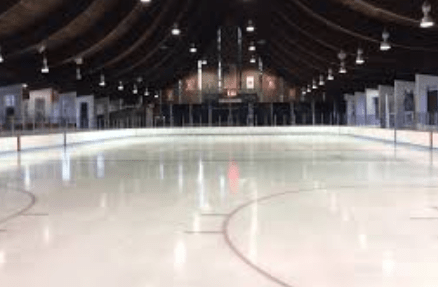
The ideology that “Australia is not a finished product” is introduced in my first blog as I discuss Judith Wrights concept of “The Mountains Own Meaning” which can be interpreted as a place that withholds specific meaning for an individual. For this, I decided to write a creative piece about a childhood ice-rink that holds importance to me and that I would not like to see destroyed which can be found here:

https://thebestofliterature.art.blog/2019/08/18/the-rink/. However, while considering a place I would not like to see destroyed, I was urged to reflect on the meaning of the land to Indigenous Australians and how stripping them of this still affects Indigenous people today. Thus, highlighting the way in which “Australia is not a finished product” as Indigenous people are still being affected today.

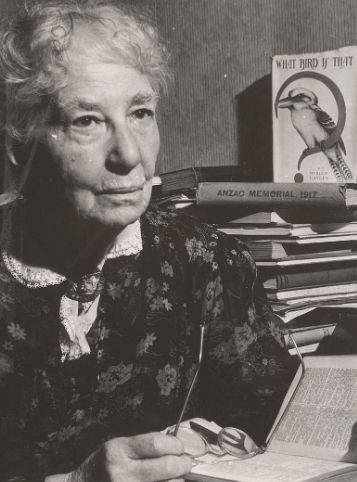
In my second blog (which can be found at this link: https://thebestofliterature.art.blog/2019/08/26/a-tribute-to-dame-mary-gilmore/) I decided to write a tribute to Dame Mary Gilmore as she amplifies the treatment of women in Australian society through her poem “Eve’s Song”; an issue that still withholds prominence today. Gilmore’s particular way with words in her poem highlights her sheer bravery as she spoke with such assertion and conviction during a male-dominated period. In my blog I aim to bring this quality of Gilmore to light as I believe she truly articulates and sheds light on such a significant Australian issue. In creating this poem, Gilmore has taken a shot at deconstructing stereotypes while rearranging the typical Australia image of masculinity. The fact alone that Gilmore had to create this poem to deconstruct such issues and the way her poem still holds relevance for readers such as myself today highlights the way in which “Australia is not a finish product”.

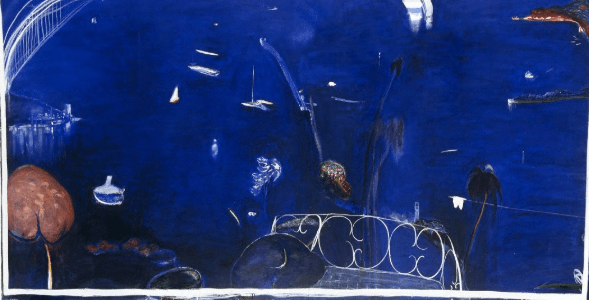
In my third blog I catapulted myself into the writings of Patrick White. It is here that I critically analysed how his short story “Down at the Dump” reflects ideologies presented in his essay “The Prodigal Son” and in turn, demonstrates not only the issues in our society but how we can overcome these issues to move closer to a “finished product” of Australia. In my blog, I particularly focused on Whites exploration of materialism in Australian Suburbia; a shallow trait that unfortunately remains within our streets. This is explored in my fifth blog as I explore Lisa Bellear’s “Urbanised Reebocks. Bellear highlights the way in which materialistic items can take over one’s identity.  However, White exclaims that although there is this sense of materialism that we are so fixated on, it can be overruled by focussing on the ‘poetry’ and ‘mystery’ found in our simplistic Australian ways. Bellear idealises this in her poem as she removes her shoes (or materialised possessions) and comes in bare contact with the land, finding ‘poetry’ in her connection with it. I found myself practicing the art of focussing on the ‘poetry’ of simplistic Australian settings in our visit to the national art gallery which can be seen in my fourth blog; a poem about Brett Whitley’s painting of Sydney Harbour called a “Balcony 2”. In the poem I used a Ekphrasis style of writing to highlight the poetry found in the blue tones and sensual images of Sydney harbour. It is while going into detail about this painting that I realised I was not focused on anything other than the beauty of the image itself, demonstrating to me how accurate Patrick White is. This made me ponder, if everyone found this same ‘poetry’ in their simple Australian life perhaps we could begin to amend the issues that make our country incomplete.

To conclude, through exploring different pieces of Australian literature and engaging with these weekly blogs, I have come to realise the way in which “Australia is not a finished product”. Issues continue to circle around Australian society and affect individuals. Perhaps if we were to learn from the past and look into the ‘poetry’ as well as ‘mystery’ found in simple Australian ways we could begin to focus on the beauty within our country allowing us to move forward into a ‘complete’ Australia.
Australian Literature peer review 4

Blog by: Bruno Filletti. https://brunosliteratureblog.wordpress.com/2019/09/02/art-gallery-of-new-south-wales/

Hi Bruno, I really enjoyed this blog entry! I firstly enjoyed the way you verbally captured “Milford Sound, New Zealand” by Eugene von Guérard. I like your choice of wording in this paragraph to describe the greatness and majestic quality of the painting. When gazing upon this painting I would have to agree – you are struck with a sense of romanticism and beauty. I like how you have directly contrast this sense of beauty that interested you about the painting with the challenging Captain Cook sculpture. I found the way in which you were able to juxtapose the beauty found in the painting with the sombre tone of the sculpture particularly appealing. I also think it was great to see you mention the way the sculpture challenges typically ‘mighty’ views of Captain Cook, giving you good link to the question. I think perhaps to strengthen this link you could potentially give more historical insight into Captain Cook himself. Perhaps also you could fine tune your blog and check over for any grammatical errors to make it stand out that little bit more. Other than I thought it was really interesting myself to see what artworks you were interested in and also challenged you. Keep up the good work!

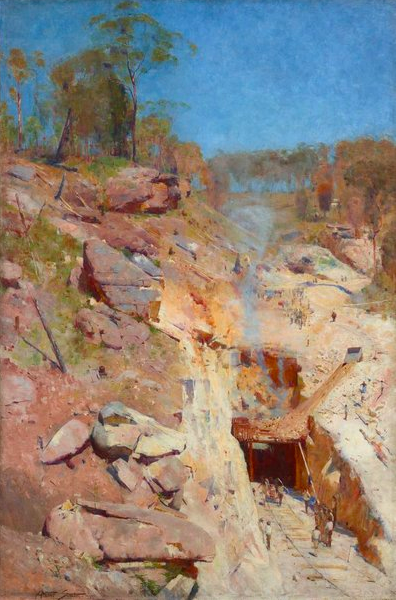
“Fire on Lapstone Tunnel”

How does Anthony street’s “Fire’s on Lapstone Tunnel“ visually reflect ideas explored throughout the unit ‘Australian Literature’ ?

Hanging upon the walls of the National Art Gallery of New South Wales sits the “Fires on Lapstone Tunnel” by Anthony Street. Despite the arrange of Australian pieces that hung beside this painting, I personally feel as if this particular painting by Street has visually cemented my understanding of the themes explored through the unit Australian Literature. I believe in this painting, Street highlights the power of the Australian landscape and the destruction of colonisation on the spiritual, cultural and historical aspects of Australia in which are key ideologies that we have explored throughout the unit. Depicted in the painting is the very first tunnel being created in the Blue Mountains. The art work is split into two sections; to the right hand-side are people small in size building the tunnel while to the left is the natural elements of rock and bush. The left-hand side of the painting is dominate to that of the right-hand side, demonstrating the power of the bush over the colonisers. Moreover, the people in the painting appear inferior to the natural elements and injured due to tumbling rocks. In painting, as the nature appears superior and even dangerous to the colonisers, Street comments on the power as well as catastrophic destruction of the land in which once had historical, cultural and spiritual qualities to Indigenous people, the traditional custodians of the land. The destruction of the land and therefore these qualities were further explored throughout the unit within Lisa Bellear’s poem ‘Urbanised Reebocks’. In her piece, Bellear illuminates the spiritual, historical and cultural corrosion of the traditional way of life for Indigenous Australians due to materialistic obsessions, however, emphasises the importance of the land in healing this sense of destruction. This is evident as Bellear states: “uncloaked feet hit the earth…and it’s ok to cry” (Urbanised Reebocks). It is evident that as the protagonist removes her shoes (and therefore strips herself of materialised creations) she comes in contact with the land in which has a profound effect on her. This contact with the land allows the protagonist to remember the power of nature as opposed to man-made items and reflect upon the destruction of spirituality as well as culture, hence aligning with the Street’s painting. Thus, it can be noted that a key theme taken from the unit Australian Literature is the power of land and the destruction of spiritual, cultural as well historical qualities associated with Australia. It was not until gazing upon Street’s painting that I really connected with these ideologies and pieces of writing explored in class such as Bellear’s poem. The art work provoked me to consider whether or not modern-day Australia appreciates the power of the land and acknowledges the destructions that were forced upon it and the traditional custodians of the land. Perhaps, we are on the right track but perhaps, we also still have a long way to go.

Feature image: “Fire on Lapstone Tunnel” by Anthony Street taken from the National Art Gallery of New South Wales’ website: https://www.artgallery.nsw.gov.au/collection/works/832/

Australian Literature Peer Review 3

Blog by: Lauren Perry. https://australianliteratureblogbylaurenperry.home.blog/2019/09/15/blog-4/

Hi Lauren, I really like how positive you have made this blog! This letter appears very easy to read and well punctuated, it felt like reading a real letter that had been sent to Meg as it flows. I have to agree with your stance, that being that Meg should go for whatever/whoever it may be that makes her happy. I also really like how you incorporated Aunt Daise into the letter I though that was very sweet. This blog led me to think about what it may be that Patrick White might think of your letter. I think he would love that you have encapsulated that sense of ‘mystery’ and ‘poetry’ that is stemmed from Megs and Lummy’s relationship. I think perhaps if you had made this letter a little longer and had some more in depth detail perhaps about Meg, Lummy or Myrtle, it would of strengthened your blog. Otherwise, I really like this entry. Keep up the good work!

“Down at the Dump”

Chose any one of the Patrick White texts mentioned above and say how you think it illustrates what White was saying in his essay “The Prodigal Son”.

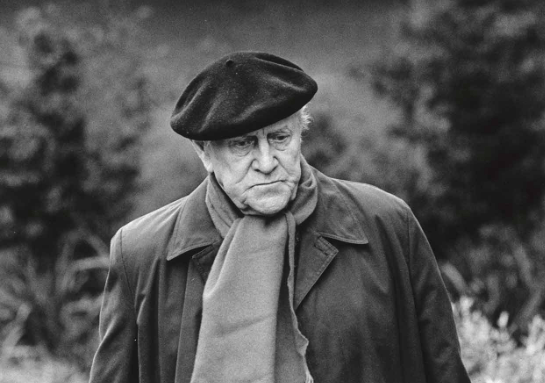
In Patrick White’s essay ‘the Prodigal Son’, White subtly critiques the cyclical and ‘ordinary’ nature of Australian suburbia. However, although acknowledging this sense of ‘ordinary’ that prevailed the streets of Australia, it is also exactly what inspired White to remain here. White took this opportunity of staying in Australia to explore this Australian mundanity and in turn, demonstrate through his writing how ‘poetry’ and  ‘mystery’ can be found beneath the seemingly simple lives of Australians and overrule shallow, materialistic desires. I believe this ideology can be noticed in White’s short story ‘Down at the Dump’ through the juxtaposing characters Myrtle and Meg. In the short story, White expresses Megs deep sadness due to the loss of her Aunt Daise, however on the contrary Myrtle (Megs Mother), does not appear sadden by her sister’s death as she is more so concerned with the way people portray her and her family. This is evident as she states: “Meg?…Did you polish your shoes?”, highlighting Myrtles lack of empathy in the situation as she cares more so of the family’s aesthetic appearance at the funeral than her sisters death. Moreover, this materialistic trait contrasts the ‘poetry’ and ‘mystery’ found within the relationship between Meg and her Aunt, allowing readers to embrace the poetic normality of the relationship and question the materialism of Myrtle. This is evident whilst Meg and Daise are picking flowers as White states: “Meg loved the idea of it, she loved Daise”. Hence, through creating these contrasted characters White allows one to consider the extraordinary emotions that can derive from ordinary relationships and the impact that this can have on one (such as meg). By doing so, he further allows one to question the notion of materialism and think about how materialistic desires can blur one’s sight of the things happening in the world around them.

Feature image: Patrick White taken from google images https://www.google.com/search?biw=1050&bih=585&tbm=isch&sxsrf=ACYBGNQ45Z5vLwsx4J9Fglve55HQ6Bzqdg%3A1571201819864&sa=1&ei=G6OmXYClNIWv9QOxioWgCg&q=patrick+white+&oq=patrick+white+&gs_l=img.3..0l10.2102868.2106316..2106638…1.0..0.699.5305.0j3j0j7j1j3……0….1..gws-wiz-img…..9..35i362i39j0i131j0i67.mW-yXfPhRLs&ved=0ahUKEwjAnt_y_p_lAhWFV30KHTFFAaQQ4dUDCAc&uact=5#imgrc=zT0F9bR7YUkc-M:

The balcony 2

Take any single Australian painting that you saw at the gallery yesterday (it must be one that you saw) and write a description either in poetry or prose. Pay close attention to detail in your description. What you are in fact doing in this exercise is a piece of Ekphrastic Writing. Check up the meaning of this word!

As I shuffle into the white room of displays,
A sight of mighty blue whisks me away.
 
There I stand atop of it all,
Upon the spiral balcony.
Gazing into the deep sea below,
White sails slice through its beauty -
Daring to taint the mighty blue,
But they fail to do so miserably.
 
By my right side,  
Floats a splash of dotted green.
It lays on a bed of poignant brown,
With open arms inviting me in –
But still no match for the sight I see;
The meditative mighty blue.
 
To my left stands tall a bridge,
So famous in name and looks.  
It stretches far beyond
Into a faded fogged city aloof,
Yet still no match for that of the mighty blue.
 
There is one sight however,
That battles for my attention too.
A peach-like tree standing still,
Daring me to release my naked soul,
To the depths of the mighty blue.
 
It is right there in that moment,
That I come to realise so much more.
The power of shape,
The power of colour tones,
The power of nature.
 
A slight chatter snap’s me back,
And I realise exactly where I am.
Staring back into the mighty blue,
Into the magic of Brett Whitely,
From within the white walls.

Feature image: Brett Whitley’s “Balcony 2” taken from google images. https://www.google.com/search?q=the+balcony+2+brett+whiteley&sxsrf=ACYBGNTfqA-s7mqTx_0TlD5d-NXgXPdasA:1571200958945&source=lnms&tbm=isch&sa=X&ved=0ahUKEwiY-ZzY-5_lAhUMAXIKHe0lAgMQ_AUIEigB&biw=1440&bih=789#imgrc=FVSXMlBzZQa2EM:

Australian Literature Peer Review 2

Blog by: Courtney Mattick. https://courtneyemattick.art.blog/2019/08/26/week-5-first-class-marksman/

I thought that your interpretation of Ned Kelly was very interesting Courtney! I am particularly interested in how you have perceived Ned’s armour as a form of ‘cape’, symbolically inventing him as a ‘hero’. I agree with this, however I believe that contrast of the black armour against the pale scenery could act as a form of pure identification for Ned himself as his armour is truly iconic. I also like how you have noticed his clothing and highlighted how the sleeves blend with the nature. This made me further think about the identification of Ned and if this could perhaps be a further statement on how the armour does/does not define him? I guess that could be left to interpretation! I think maybe to strengthen your blog you could add some more historical information about Ned himself and how he is perceived to highlight you interpretation of him as a hero. Perhaps you could also talk a little more about the different techniques used and contrasting colours to really back up what you are saying! I really like this blog!

Australian Literature Peer Review 1

Blog by: Anna Castagnella. https://literaturewithanna.art.blog/category/american-literature/best-blog/

I really like the way in which you have encapsulated what Thoreau means to ‘live deliberately’. I particularly agree with your idea that to live deliberately is to have a ‘hunger to live a life that exceeds societal barriers.’ I think that we are constantly restricting the way in which we live due to societal barriers and this has consequences on our personal growth as human beings; one day it could all end and I don’t think we should be left with the lingering question of whether or not we have grown as much as we possibly can; doubting our own lives. I think you have perfectly encapsulated this by relating it with your real-life experience. Your experience has made me consider my own and what I could be doing to live life with more intent as things happen (like what you unfortunately went through) at any moment of any day.  I also like how you have related quotes to your own experience but maybe a little more textual unpacking of these quotes next time could really add to your critical analysis!

A Tribute to Dame Mary Gilmore

Write a short tribute to Dame Mary Gilmore drawing on any one of her poems (in the Pen Anthology 256-259) to show how important her ideas are to Australians.

Dame Mary Gilmore had an eloquent way with words. She was able to convey extremely important societal issues of her time in an alluring, concise way and to me this is one of the most impressive aspects of Dame Mary Gilmore’s writing that laments her importance to Australians. This is highlighted throughout her poem ‘Eves Song’ as she was able to resonate ideologies of the poor treatment of women during the 19th century in Australia through her own whimsical way of writing, allowing the poem to still retain meaning to women of today’s society. Dame Mary Gilmore particularly places focus upon the way in which women during this time were subservient to their male-counterpart and were bound to societal expectations of marriage. This can be identified through the repetitive phrase in the poem “I span and eve span”; a biblical allusion which I have interpreted as alluding to the idea that Eve was made purely for Adam’s benefit. Therefore it is necessary and societally expected for women to tend to man. As powerful as the meaning is behind this wonderfully worded statement, it is the way in which Gilmore continues to utilise it throughout her poem in which resonates with me most. The repetition almost reinforces the idea that women always find their way back to this restrictive way of thinking that they are bound to man. It is as if you can see Gilmore’s persistent nature through this very quote; she is passionate and she wants to make it clear to women that they are independent and “that more than man was love and prize”, exemplifying her importance to Australians as this message is still one in which is acknowledged today.

Although we are to commend Dame Mary Gilmore on her writing abilities, her sheer bravery cannot go unsaid. The time in which she wrote did not give women the liberty and free-will to speak their mind, however, Dame Mary Gilmore did exactly that. She is to be acknowledged for this and the message that she so beautifully and strongly articulated through her poem in which is still be appreciated by Australian women today; cementing the importance of Dame Mary Gilmore’s ideologies to Australians.

Feature image: Dame Mary Gilmore taken from google images https://www.google.com/search?biw=1050&bih=585&tbm=isch&sxsrf=ACYBGNTUOLZaKN4MJ2cBuF_Bb4ZoNv_zYw%3A1571201539498&sa=1&ei=A6KmXYKLHsn7rQHKxJzAAg&q=dame+mary+gilmore+&oq=dame+mary+gilmore+&gs_l=img.3..0l3j0i30l2j0i24l5.275203.278391..278639…1.0..0.238.3172.0j14j4……0….1..gws-wiz-img…..8..35i362i39j0i67j0i131j0i8i30.DryM-Yo54Vo&ved=0ahUKEwjCmIft_Z_lAhXJfSsKHUoiBygQ4dUDCAc&uact=5#imgrc=XWPFxz1QsiIW1M:

The Rink

For Judith Wright the Mountain has its own meaning. Describe a favourite place that has a real meaning for you that you would hate to see destroyed.

There is a therapeutic like drug embedded into the soul of the rink. As I slide across the milky wonderland, gliding like a frog in clear waters, every last minuscule of tension is ridden from my body and absorbed into the ice. I circle mindlessly around and around and around again in a trance; lost in the cool thick air and lingering smell of canteen hot chips. As I loop around, my eyes are drawn up to the deteriorating cladding and thick condensation. I slowly drift my eyes to the run-down canteen and always vacant grandstand; both peeling in paint. The tight, bright blue unlevelled skates attached to me remain uncomfortable and damp, however, do not restrain me from propelling myself through the cold. As I glance around at what would appear to be a sombre wasteland to the naked eye; I find a rich beauty in the stories that it withholds. On my first lap, I think back to the many birthday parties I attended here as a child. The days of never-ending pieces of fairy bread and innocent giggles as we skated into our adolescent years. I think about these years on my second lap. I am brought back to my high school sport days where young love blossoms as couples remain interlocked around the rink and friendships are cemented as you help one another up from the harsh surface of the ice. The ice made these days seem so easy and smooth for an emotional adolescent, keeping our minds clear during what seemed to be such a foggy time. As I skate around for my third and final lap my mind shifts back to the present day. I had grown extremely fond of this beaten down old rink and it saddened me to think this could possibly be my last lap. As I came off the ice I returned my skates, packed my bag and made my way to the exit but not before signing a petition for the future of the ice rink and catching one last glimpse of my childhood. I couldn’t help but feel that if this rink is to go, then a part of me would with it too.

Feature Image: Ice Skating Rink taken from google images https://www.google.com/search?biw=1050&bih=585&tbm=isch&sxsrf=ACYBGNQNC4b_v7VAwsL8DKJtMQlUoMCBHA%3A1571201521211&sa=1&ei=8aGmXcmzDND2rQGPmIGwAw&q=ice+skating+rink&oq=ice+skating+rink&gs_l=img.3..35i39j0i67l2j0l7.15489.15489..16149…0.0..0.174.174.0j1……0….1..gws-wiz-img.7c9wCUe4wns&ved=0ahUKEwiJ8Krk_Z_lAhVQeysKHQ9MADYQ4dUDCAc&uact=5#imgrc=jGWhgtDgWc2lyM:

Blog at WordPress.com.

Up ↑

Design a site like this with WordPress.com
Get started